How to Make a Narrow Side Yard Look Full (9 Easy Ideas)
A narrow yard can sometimes feel unfinished.
Maybe it’s that long stretch of bare fence or wall. Maybe it’s the way everything seems flat and exposed. Or maybe it’s the fact that no matter how many plants you add, it still somehow feels sparse.
If you have a narrow side yard, a small backyard, or a long patio garden, I promise you this: fullness has nothing to do with square footage.
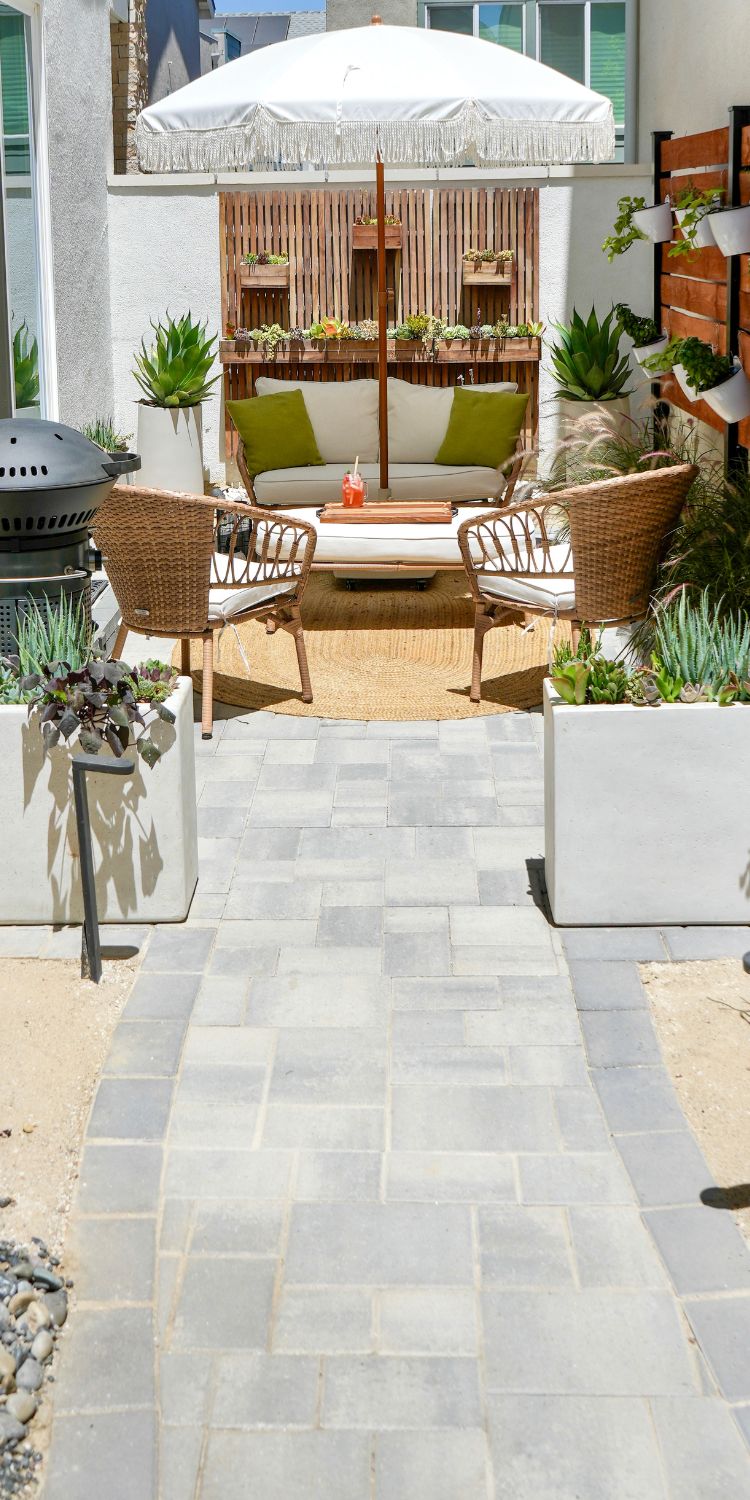
It has everything to do with layering.
A narrow yard can feel lush, dimensional, and beautifully intentional when you use height, repetition, and texture in the right way. I’ve learned this firsthand working with our small side yard — which we took from completely bare to a beautiful, productive garden and sitting area.
It’s probably my favorite thing to talk about here on this blog because I’m proud of it and because I know many other people have tiny yards that they’d like to enjoy. Here are my tips for how to make a narrow yard look full — without overcrowding or overwhelming the space.
1. Start With Vertical Layers (This Changes Everything!)
The biggest mistake in narrow yards is planting everything at ground level.
When all your plants sit at the same height, your eye travels straight down the space and registers it as long and empty. The fix? Draw the eye upward.
Add vertical structure:
- Trellises against fences
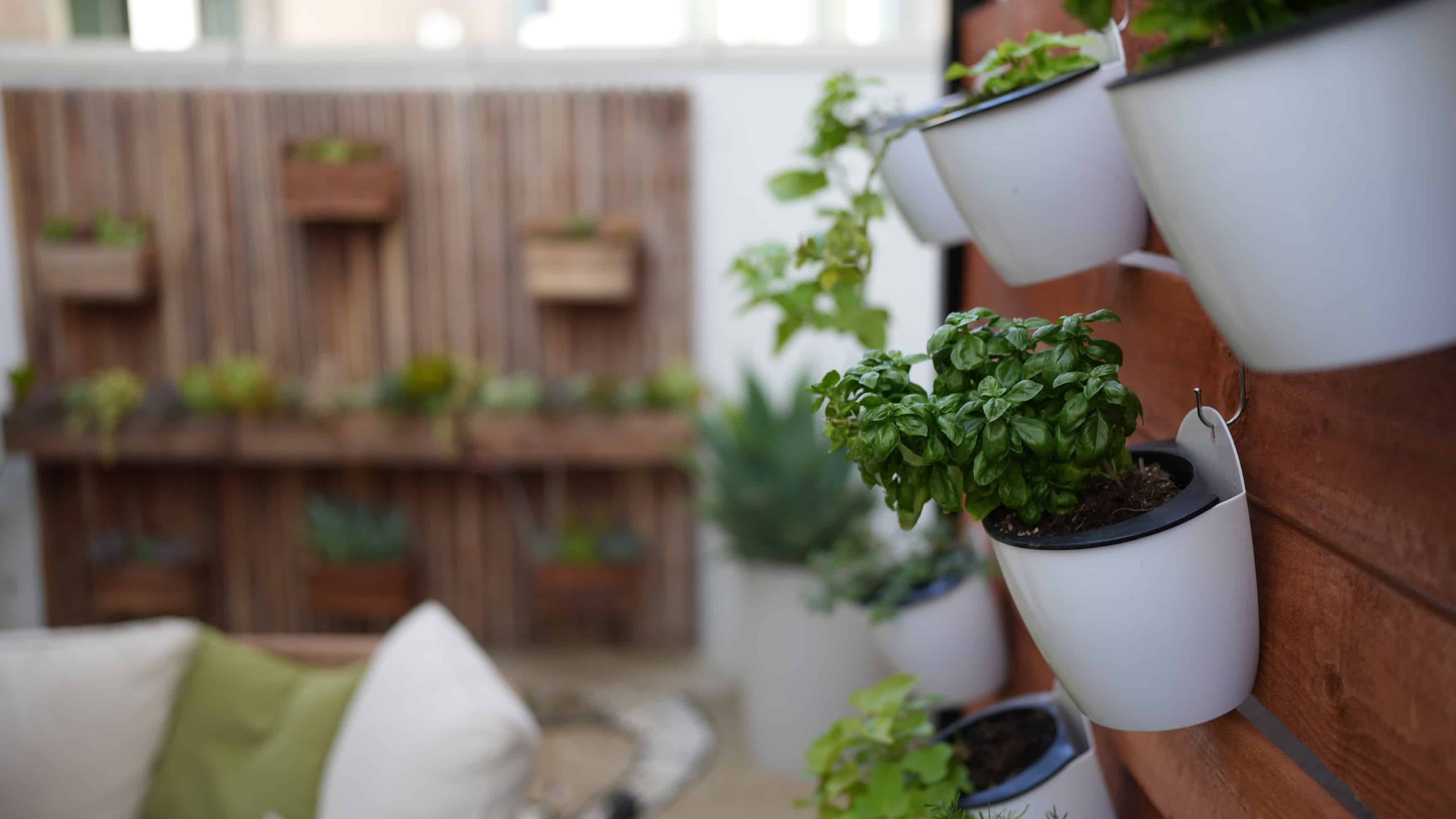
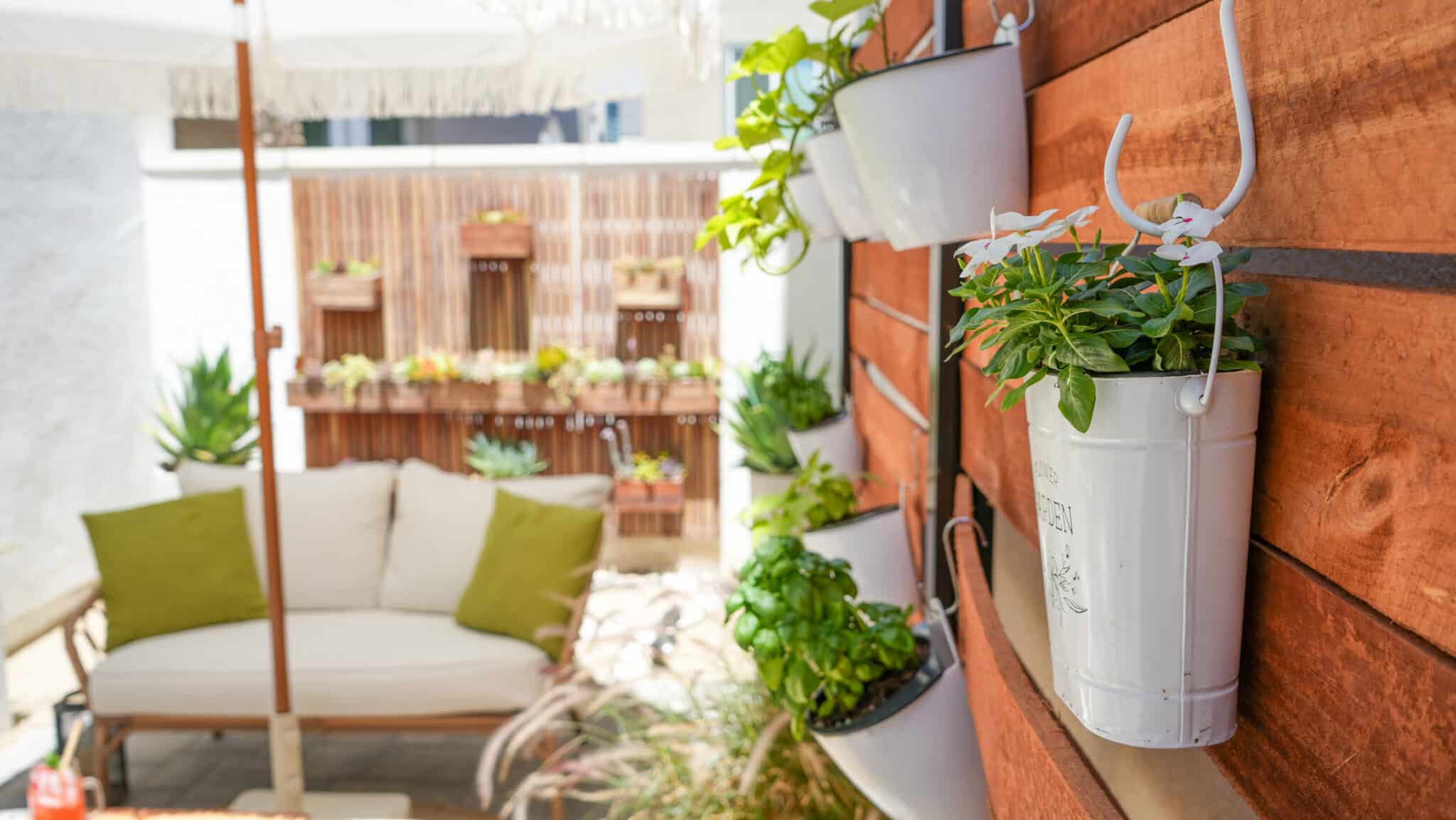
- Wall-mounted planters (perfect for succulents and herbs!)
- Vertical garden panels
- Climbing vines
- Tall, narrow shrubs
- Tall planters
Climbing plants like jasmine or climbing roses instantly soften a long fence line. If you prefer a cleaner look, use a slim trellis and train something structured upward.
You can also use tall ornamental grasses like fountain grass or feather reed grass to add fullness to a space without having to plant an actual lawn. Even upright rosemary works beautifully in sunny narrow yards, adding fragrance and structure.
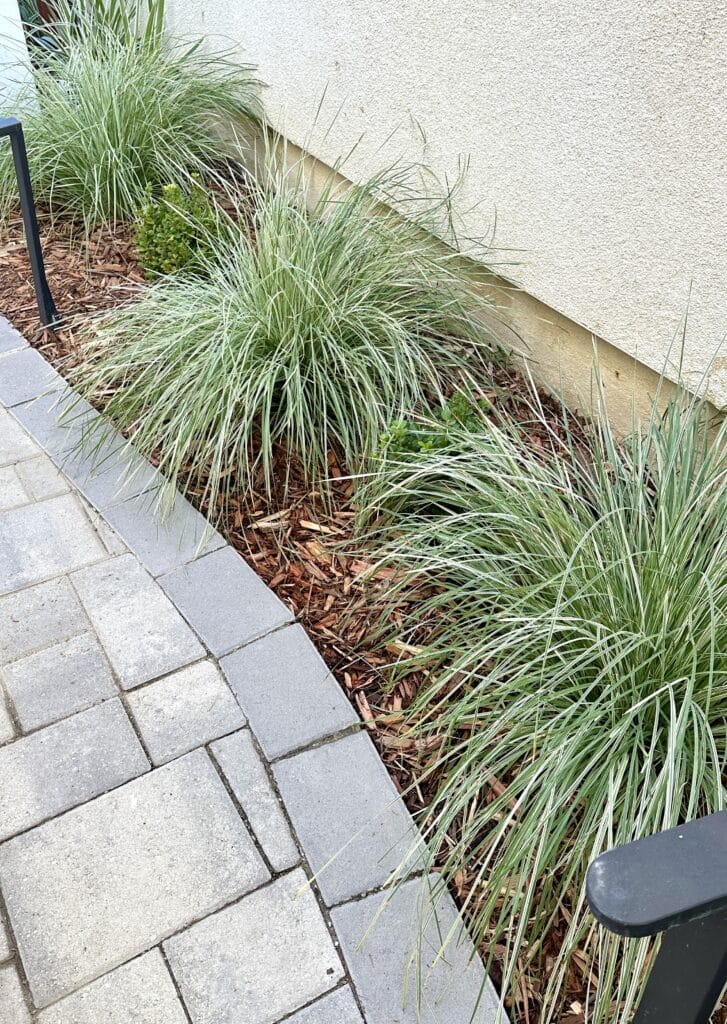
When you create height variation, the yard feels layered instead of flat.
2. Create the Illusion of Layers (Instead of True Depth)
In a narrow yard, you usually don’t have enough room for traditional back–middle–front planting beds. If your space is only a few feet wide, trying to squeeze in three rows of plants can quickly make it feel crowded.
Instead of planting in depth, layer vertically and outward.
Here’s what that means:
Layer 1: Vertical Height (Against the Fence or Wall)
Use the vertical surface as your “back layer.”
- Climbing vines on a slim trellis
- Espaliered shrubs
- Wall-mounted planters
- Tall, narrow grasses
- Upright rosemary
These add height without stealing floor space. When plants grow upward instead of outward, the yard feels full but still functional.
Layer 2: Slim Mid-Height Plants (Hugging the Base)
Instead of a wide middle row, choose narrow or upright plants that stay compact.
Look for:
- Columnar shrubs
- Compact lavender varieties
- Ferns that grow upright rather than spreading
- Small hydrangea cultivars
- Boxwood in a narrow line
The key is to choose plants that grow up, not out.
Layer 3: Soften the Edges (Without Blocking the Walkway)
In tight spaces, ground covers shouldn’t spill far into the path.
Instead, use controlled softness:
- Creeping thyme tucked along edging
- Trailing plants in raised containers
- Low succulents in narrow strips
- Planters elevated slightly off the ground
You can also soften hard edges by letting plants spill from containers, not from the soil itself. That keeps the walkway open while still creating visual fullness.
The Real Secret for Narrow Yards
Fullness in tight spaces doesn’t come from planting rows.
It comes from:
- Vertical structure
- Repetition
- Larger containers
- Defined pathways
- Texture contrast
In fact, in very narrow yards, two large, layered planters placed strategically can create more fullness than an overcrowded planting bed ever could.
3. Use Repetition to Create Designer Fullness
If every plant in a narrow yard is different, the space can feel busy — and strangely empty at the same time.
Repetition creates cohesion.
Try repeating:
- The same shrub every few feet
- The same container style
- The same plant color palette
- The same shape (round shrubs, trailing edges, upright grasses)
For example, repeating three identical planters spaced evenly along a wall instantly feels more intentional than scattering six mismatched pots.
Repetition tricks the eye into seeing abundance.
4. Go Bigger With Containers (Not Smaller)
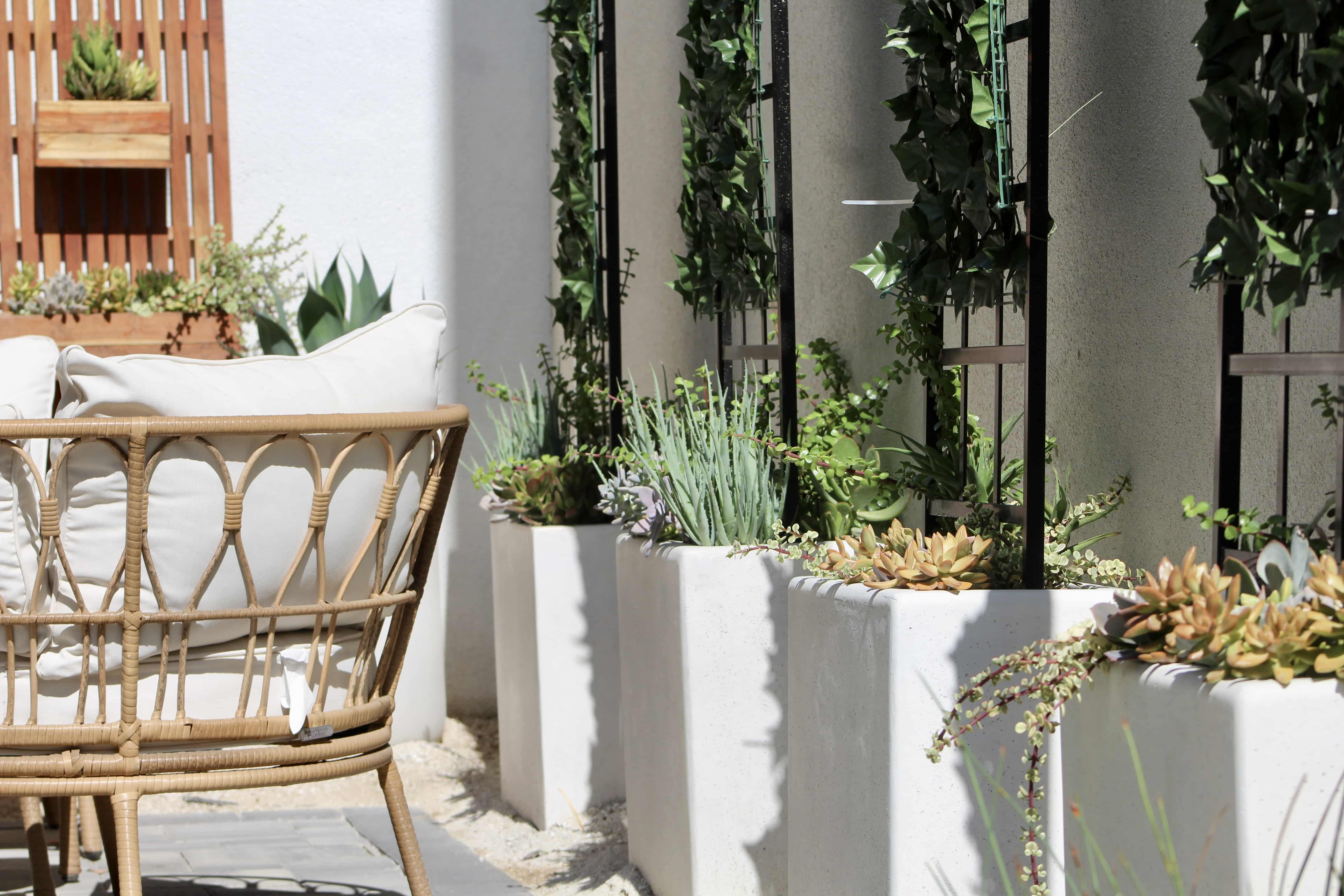
It’s tempting to fill a narrow yard with lots of small pots. But small containers often make a space look cluttered instead of full.
Instead, choose fewer, larger containers.
Large planters:
- Create visual weight
- Anchor the space
- Allow plants to grow fuller
- Hold moisture better
Use the classic “thriller, filler, spiller” method:
- Thriller: tall, upright plant
- Filler: mounding mid-height plant
- Spiller: trailing plant that softens the edges
Two large, layered containers will always look more luxurious than six tiny pots.
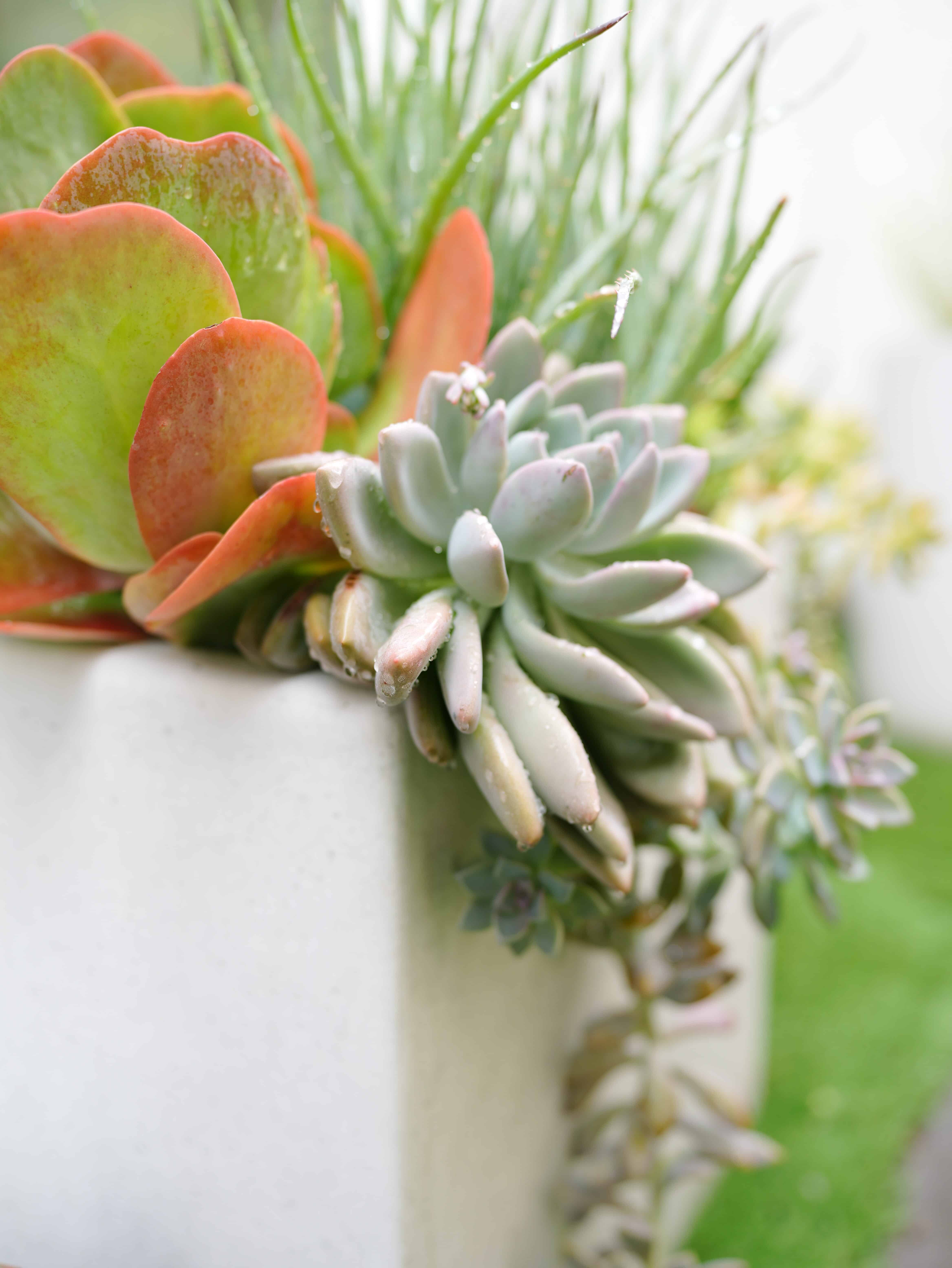
5. Add Texture, Not Just Flowers
Fullness isn’t about blooms alone.
In fact, some of the lushest-looking yards rely heavily on texture.
Mix:
- Fine leaves (ferns, grasses)
- Large leaves (hostas, hydrangeas)
- Structured plants (succulents, boxwoods)
- Airy plants (lavender, salvia)
Texture creates visual richness. When plants contrast in shape and leaf size, the yard feels layered and alive — even when nothing is in bloom.
Herbs are also beautiful for narrow spaces. Rosemary, thyme, and oregano add softness and practicality while contributing to that abundant, Mediterranean look.
6. Define Zones (Even in a Narrow Yard)
This may be the most underrated trick of all.
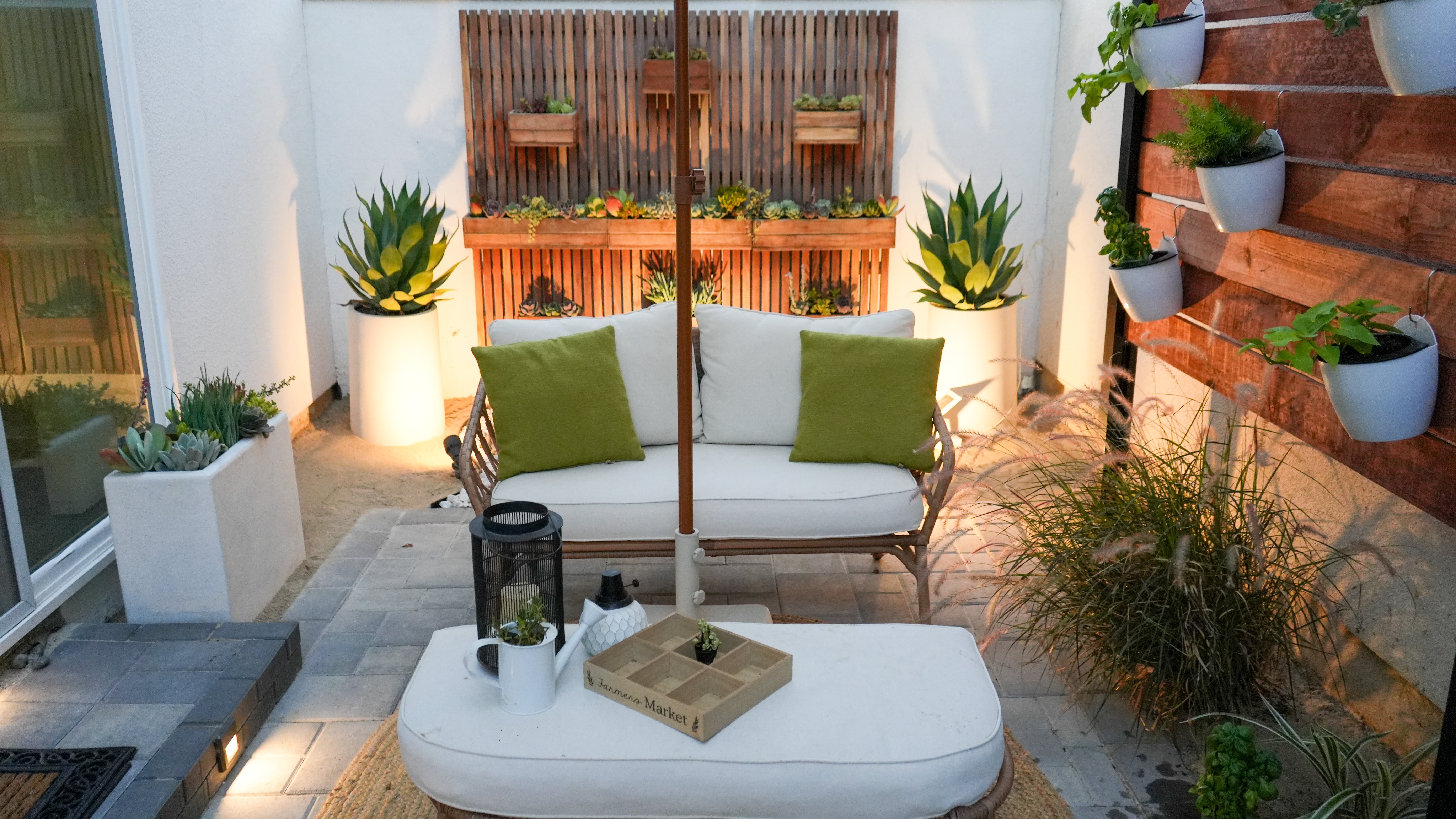
A narrow yard feels empty when it’s one long stretch with no purpose. But when you divide it into mini “zones,” it feels complete.
Consider:
- A small bistro table tucked into one corner
- A bench surrounded by potted plants
- An herb station near the kitchen door
- A reading chair with layered planters
When a yard has moments instead of emptiness, it feels fuller — even if nothing has changed about its size.
You’re not just landscaping. You’re creating rooms.
7. Use Pathways Strategically
A defined walkway actually makes planted areas feel denser.
Add:
- Stepping stones
- Gravel with metal edging
- Narrow pavers
- Brick pathways
When you clearly define the walking area, your planting beds feel intentional and structured instead of accidental.
The contrast between hardscape and greenery makes plants stand out more — which increases the perception of fullness.
8. Light It Well
Lighting is what makes everything glow at night.
Solar uplights aimed at shrubs or grasses create dramatic shadows and depth. String lights along a fence soften the vertical lines. Lanterns placed near planters add warmth.
A narrow yard that’s thoughtfully lit feels layered and cozy instead of dark and flat.
Sometimes fullness isn’t just what you see — it’s how the space feels.
9. Avoid These Common Mistakes
There are a few things that unintentionally make narrow yards feel emptier:
- Planting only along one side
- Using too many tiny plants
- No height variation
- Overcrowding with bulky furniture
- Mixing too many unrelated styles
Keep it cohesive. Keep it layered. Keep it intentional.
A Simple 3-Step Plan to Make Your Narrow Yard Look Full
If you’re not sure where to start, do this:
- Add one vertical element (trellis, tall shrub, or mounted planter).
- Replace small pots with two large layered containers.
- Add one trailing plant to soften a hard edge.
These three changes alone can transform the entire feel of a skinny yard.
Small Doesn’t Mean Sparse
A narrow yard isn’t a limitation. It’s an opportunity to design with intention.
When you focus on height, layering, repetition, and texture, even the longest, skinniest side yard can feel lush and thoughtfully designed.
Fullness doesn’t come from more plants.
It comes from better structure.
And once you understand that, your narrow yard won’t feel awkward anymore — it will feel curated.
